React Native vs Flutter: Which Framework Should You Choose for Your Mobile App in 2026?
Businesses today expect mobile applications to launch quickly, perform smoothly, and provide an excellent user experience across both Android and iOS devices. Developing separate apps for each platform can increase costs, extend timelines, and make maintenance more complex. That's why cross-platform frameworks have become the preferred choice for startups, SMEs, and enterprises.
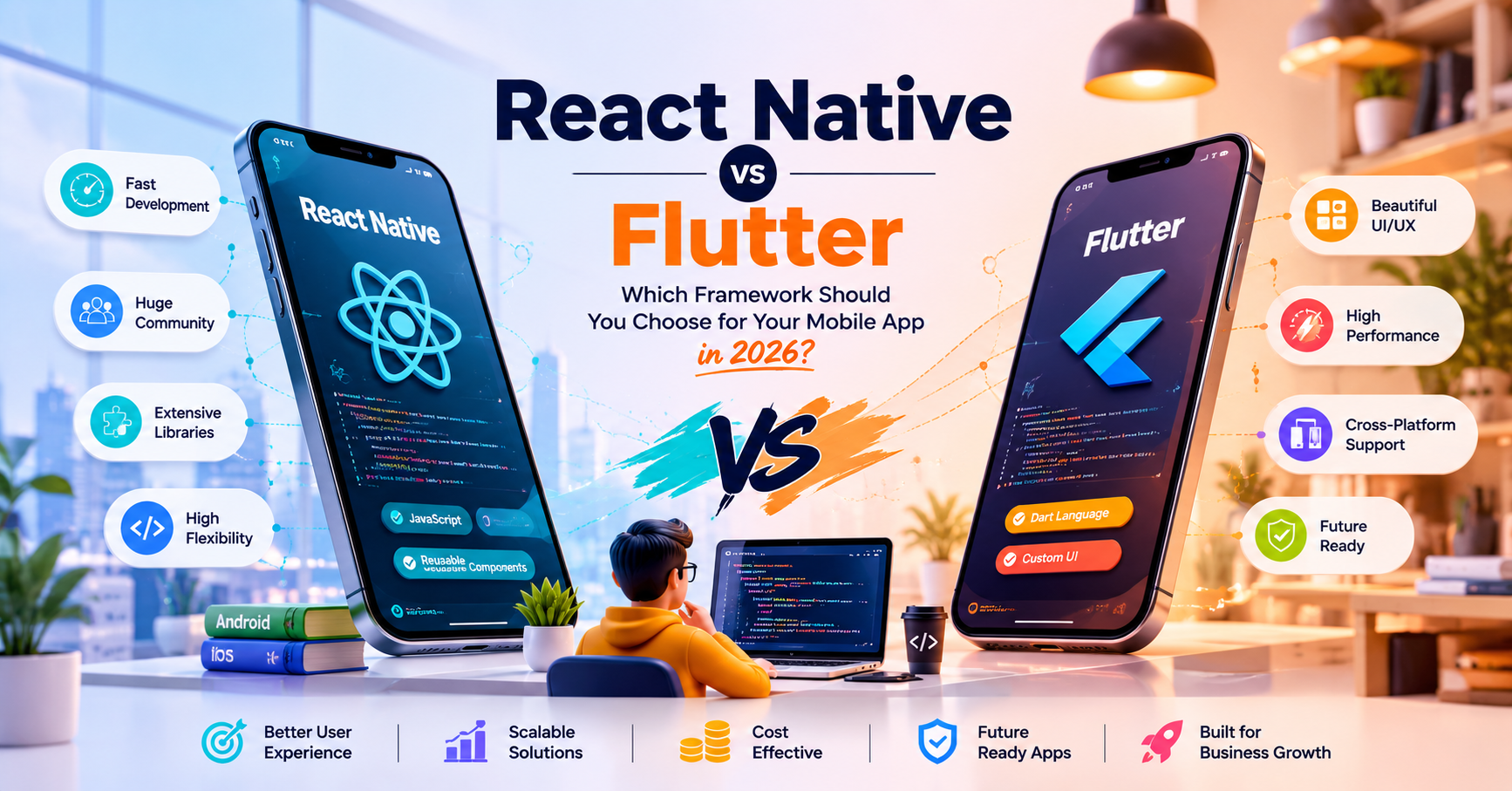
Among all available frameworks, React Native and Flutter continue to dominate the cross-platform app development market in 2026. Both allow developers to build Android and iOS apps using a single codebase, but they differ in performance, development approach, user interface capabilities, and long-term scalability. Understanding these differences will help you choose the right framework for your business.
What Is React Native?
React Native is an open-source framework that enables developers to create mobile applications using JavaScript and React. It uses native UI components, allowing applications to deliver a look and feel similar to fully native apps.
One of React Native's biggest advantages is code reusability. Developers can share a significant portion of the code between Android and iOS, reducing development time while maintaining excellent performance. Its large community, mature ecosystem, and extensive third-party libraries make it a popular choice for business applications.
What Is Flutter?
Flutter is Google's open-source UI framework that uses the Dart programming language. Unlike React Native, Flutter uses its own rendering engine, enabling developers to build highly customized interfaces with consistent designs across different devices.
Flutter is well known for its smooth animations, rich widget library, and visually appealing user interfaces. It allows businesses to create attractive, high-performance applications with a consistent experience across platforms.
React Native vs Flutter
Development Speed
Both frameworks accelerate development by allowing developers to build Android and iOS apps from a single codebase.
React Native benefits from JavaScript's popularity and a mature ecosystem of libraries, making development faster for teams already familiar with web technologies. Flutter offers a comprehensive set of built-in widgets that simplify UI creation and reduce the need for external libraries.
Performance
Flutter generally delivers excellent performance because it renders the interface directly using its own graphics engine. This makes it ideal for applications requiring complex animations and highly customized interfaces.
React Native also provides strong performance for most business applications by using native components. With proper optimization, it performs exceptionally well for CRM systems, eCommerce apps, healthcare platforms, and enterprise software.
User Interface
Flutter provides complete control over UI design, making it easier to create unique interfaces and rich animations.
React Native focuses on native platform components, ensuring applications feel familiar to Android and iPhone users while maintaining a consistent user experience.
Learning Curve
Developers with JavaScript experience usually find React Native easier to learn because it builds on existing React knowledge.
Flutter requires learning Dart, but its well-structured documentation and development tools make the learning process straightforward for new developers.
Community and Ecosystem
React Native has one of the largest developer communities in mobile app development. Thousands of libraries, plugins, and tutorials make it easier to solve development challenges.
Flutter's ecosystem continues to grow rapidly, supported by Google and an active developer community that regularly releases updates and new packages.
Which Framework Should You Choose?
The right choice depends on your business requirements rather than simply selecting the most popular technology.
React Native is ideal for:
-
Business applications
-
CRM and ERP systems
-
eCommerce apps
-
Startup MVPs
-
Enterprise applications
-
Apps requiring faster development
Flutter is ideal for:
-
Visually rich applications
-
Custom user interfaces
-
Consumer-facing mobile apps
-
Interactive platforms
-
Applications with advanced animations
Both frameworks are capable of supporting secure, scalable, and enterprise-grade mobile applications.
Benefits of Cross-Platform Development
Cross-platform development provides several advantages for businesses.
Some of the biggest benefits include:
-
Faster development
-
Lower development costs
-
Single codebase
-
Easier maintenance
-
Faster feature updates
-
Consistent user experience
-
Wider market reach
-
Better return on investment
These advantages allow businesses to launch products more quickly while optimizing development resources.
Factors to Consider Before Choosing
Before selecting a framework, businesses should evaluate:
-
Project complexity
-
Budget
-
Development timeline
-
Target audience
-
Required integrations
-
User experience goals
-
Future scalability
-
Long-term maintenance
Choosing the right framework at the beginning of the project helps reduce development challenges and future costs.
Why Choose Coding Rig?
At Coding Rig, we help businesses select the most suitable technology based on their goals, industry, and long-term vision. Whether your project requires React Native or Flutter, our experienced developers build secure, scalable, and high-performance mobile applications designed for business success.
Our services include UI/UX design, backend development, API integration, cloud deployment, testing, app store publishing, and ongoing maintenance. From startups to enterprise applications, we deliver mobile solutions that are optimized for performance, security, and future growth.
Conclusion
React Native and Flutter are both powerful frameworks that simplify cross-platform mobile app development. React Native offers a mature ecosystem, excellent native integration, and faster adoption for JavaScript developers, while Flutter provides exceptional UI flexibility, smooth performance, and modern design capabilities.
The best framework depends on your business objectives, budget, and application requirements. By partnering with an experienced development company like Coding Rig, you can choose the right technology and build a high-quality mobile application that delivers outstanding user experiences and supports long-term business growth.