Progressive Web Apps (PWA): Benefits, Features & Complete Guide for Businesses (2026)
Introduction
As customer expectations continue to grow, businesses need digital experiences that are fast, reliable, and accessible across all devices. Traditional websites are easy to access but often lack the performance and engagement of mobile apps. Native mobile applications provide a rich experience but require separate development for different platforms.
Progressive Web Apps (PWAs) combine the best of both worlds. They offer the speed and functionality of a mobile app while remaining accessible through a web browser—without requiring users to download them from an app store.
From e-commerce stores and service providers to healthcare, education, and logistics companies, businesses are adopting PWAs to improve user experience, increase engagement, and reduce development costs.
This guide explains what Progressive Web Apps are, how they work, their benefits, key features, business use cases, and why they have become a popular choice for modern digital products.
What is a Progressive Web App (PWA)?
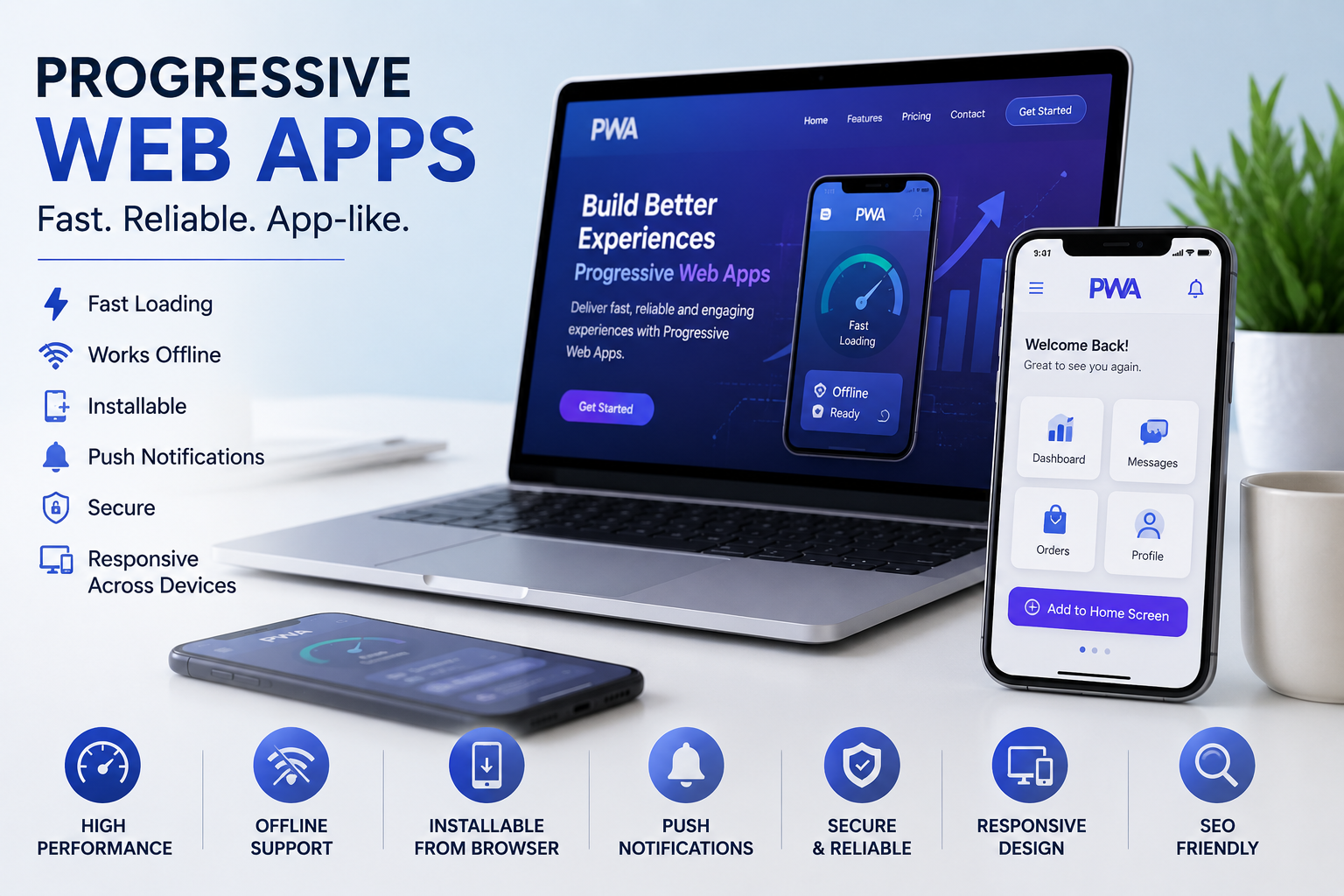
A Progressive Web App (PWA) is a web application that uses modern web technologies to deliver an app-like experience on smartphones, tablets, and desktop devices.
Unlike traditional websites, PWAs can:
- Load quickly even on slow networks.
- Work offline or with limited connectivity.
- Send push notifications.
- Be installed directly from the browser.
- Provide a responsive user experience across devices.
PWAs eliminate the need for separate Android and iOS applications in many business scenarios.
How Does a PWA Work?
PWAs use technologies such as:
- HTML
- CSS
- JavaScript
- Service Workers
- Web App Manifest
- HTTPS
These technologies allow websites to cache content, load faster, function offline, and behave similarly to native mobile applications.
Key Features of Progressive Web Apps
Installable from Browser
Users can install the application directly from their browser without visiting an app store.
Offline Access
Service Workers cache important resources so users can continue accessing content even without an internet connection.
Fast Performance
PWAs load significantly faster than traditional websites through intelligent caching and optimized assets.
Responsive Design
A single application works seamlessly across desktops, tablets, and smartphones.
Push Notifications
Businesses can send updates, reminders, and promotional notifications directly to users.
Secure Browsing
PWAs require HTTPS, helping protect user data and ensuring secure communication.
Benefits of Progressive Web Apps
Businesses adopting PWAs benefit from:
- Faster page loading
- Lower development costs
- Improved customer engagement
- Better mobile performance
- Reduced bounce rates
- Increased conversions
- Offline functionality
- Simplified maintenance
- Cross-platform compatibility
- Improved SEO compared to native apps
PWA vs Native Mobile Apps
| Feature | Progressive Web App | Native App |
|---|---|---|
| Installation | Browser | App Store |
| Development | Single codebase | Separate Android & iOS |
| Offline Support | Yes | Yes |
| Push Notifications | Yes | Yes |
| SEO Friendly | Yes | No |
| App Store Approval | Not required | Required |
| Updates | Automatic | User download required |
Business Use Cases
Progressive Web Apps are widely used in:
- E-commerce
- Healthcare
- Education
- Travel
- Hospitality
- Banking
- Food delivery
- Logistics
- News portals
- Event management
- Real estate
- Professional services
Why Businesses Choose PWAs
Organizations choose PWAs because they:
- Reach users on multiple devices.
- Reduce development and maintenance costs.
- Deliver faster user experiences.
- Increase customer retention.
- Improve website performance.
- Simplify software updates.
Best Practices for Building a PWA
To build a successful Progressive Web App:
- Design a mobile-first interface.
- Optimize performance.
- Implement offline support.
- Use HTTPS.
- Enable push notifications.
- Test across multiple devices and browsers.
- Optimize images and assets.
- Follow accessibility guidelines.
Future of Progressive Web Apps
The adoption of PWAs continues to grow as businesses seek cost-effective, high-performance digital solutions.
Emerging trends include:
- AI-powered personalization
- Offline AI features
- Web-based payment integration
- Enhanced browser capabilities
- Improved cross-device synchronization
- Richer user experiences
- Greater enterprise adoption
Frequently Asked Questions (AEO)
What is a Progressive Web App?
A Progressive Web App (PWA) is a web application that delivers a fast, reliable, and app-like experience using modern web technologies.
What are the benefits of a PWA?
PWAs offer faster loading, offline access, browser installation, push notifications, lower development costs, and cross-platform compatibility.
Are PWAs better than native apps?
It depends on the business requirements. PWAs are often more cost-effective and easier to maintain, while native apps may provide deeper access to device-specific features.
Can a PWA work offline?
Yes. Service Workers allow PWAs to cache content and continue functioning with limited or no internet connectivity.
Which businesses should use PWAs?
PWAs are ideal for e-commerce stores, service businesses, educational platforms, healthcare providers, logistics companies, and organizations that want a fast, installable web experience.
Conclusion
Progressive Web Apps provide businesses with a powerful way to deliver app-like experiences without the complexity of maintaining separate mobile applications. By combining fast performance, offline capabilities, installability, and cross-platform compatibility, PWAs help organizations improve user engagement, reduce costs, and reach customers more effectively.
At CodingRig, we develop custom Progressive Web Apps tailored to your business needs. Whether you're launching an e-commerce platform, customer portal, booking system, or enterprise application, our team creates secure, scalable, and high-performance PWAs designed to deliver exceptional user experiences across all devices.