Website Speed and SEO
Introduction
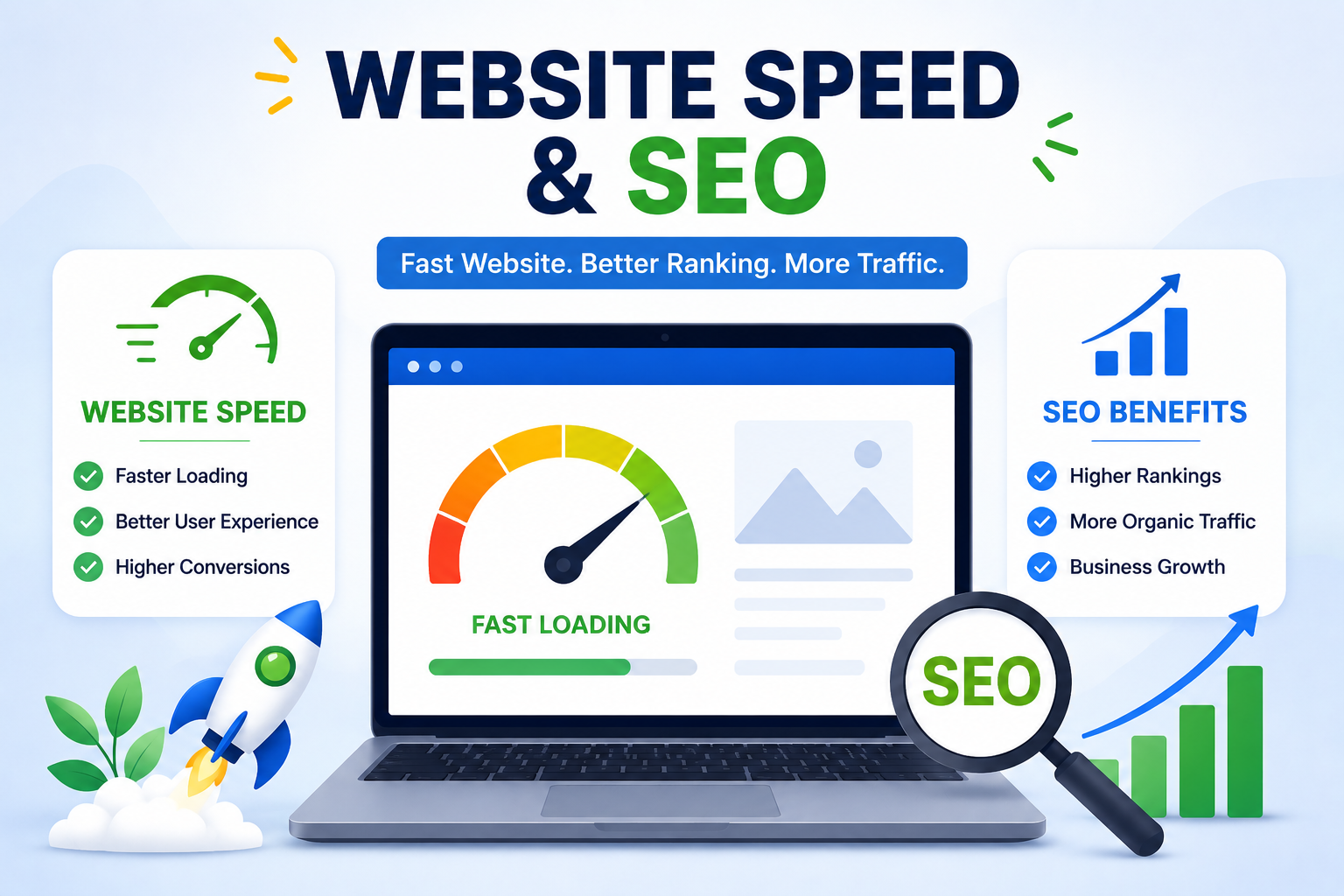
A website's loading speed is no longer just a technical metric—it's a critical ranking factor and a key part of the user experience. Search engines prioritize websites that load quickly because users expect instant access to information. Even a delay of a few seconds can lead to higher bounce rates, lower engagement, and lost business opportunities.
For businesses looking to improve their online visibility, optimizing website speed is one of the most effective SEO strategies. A fast website not only ranks better but also creates a smoother experience that encourages visitors to stay longer and take action.
What Is Website Speed?
Website speed refers to how quickly a webpage loads and becomes interactive for visitors. It includes the time taken to display text, images, videos, and other website elements after a user clicks a link.
A fast-loading website provides a better browsing experience, while a slow website often causes visitors to leave before the page finishes loading.
Why Website Speed Matters for SEO
Search engines like Google aim to deliver the best possible experience to users. Websites that load quickly are more likely to rank higher because they provide a smoother and more reliable browsing experience.
Website speed directly impacts:
- Search engine rankings
- User experience
- Bounce rate
- Session duration
- Conversion rate
- Mobile usability
Improving website speed helps both search engines and users, making it an essential part of every SEO strategy.
Benefits of a Fast Website
Better Search Engine Rankings
Search engines reward fast websites because they deliver a positive user experience. Faster pages have a better chance of appearing higher in search results.
AEO Tip
Answer common questions clearly using headings such as:
- What is website speed?
- Why is website speed important?
- How does website speed affect SEO?
This structure helps search engines and AI-powered search assistants understand your content more effectively.
Improved User Experience
Visitors expect websites to load within a few seconds. A fast website allows users to navigate smoothly, find information quickly, and interact without delays.
A better experience increases customer satisfaction and encourages repeat visits.
Lower Bounce Rate
Slow websites often cause visitors to leave before the page loads completely. Faster websites keep users engaged and encourage them to explore more pages.
Lower bounce rates send positive signals to search engines about your website's quality.
Higher Conversion Rates
Website speed directly affects sales and lead generation. Whether users are filling out a contact form or making an online purchase, faster pages reduce friction and improve conversions.
Businesses with optimized websites often experience higher customer engagement and improved revenue.
Better Mobile Performance
Most users browse the internet using smartphones. Mobile-friendly websites that load quickly provide a better experience and perform well in mobile search results.
Responsive design combined with optimized speed is essential for modern SEO.
Factors That Affect Website Speed
Several technical elements influence website performance:
Large Image Files
Uncompressed images increase loading time. Optimizing and compressing images helps pages load faster without sacrificing quality.
Poor Web Hosting
Reliable hosting plays a major role in website performance. High-quality hosting ensures faster server response times and better uptime.
Excessive Plugins
Too many unnecessary plugins or extensions can slow down a website. Regularly review and remove unused plugins.
Unoptimized Code
Clean HTML, CSS, and JavaScript reduce page size and improve loading speed.
Too Many HTTP Requests
Reducing the number of scripts, stylesheets, and external resources helps pages load more efficiently.
Lack of Browser Caching
Caching stores website resources so returning visitors experience faster page loading.
Best Practices to Improve Website Speed
Businesses can improve website performance by following these proven techniques:
- Compress and optimize images.
- Enable browser caching.
- Minify CSS, JavaScript, and HTML files.
- Choose a reliable hosting provider.
- Use a Content Delivery Network (CDN).
- Optimize website databases regularly.
- Remove unnecessary plugins and scripts.
- Implement lazy loading for images and videos.
- Use modern image formats such as WebP.
- Keep your CMS, themes, and plugins updated.
Website Speed and Core Web Vitals
Core Web Vitals are performance metrics used by Google to evaluate page experience. They measure how quickly content loads, how responsive a page is, and how stable the layout remains while loading.
Improving Core Web Vitals helps businesses provide a better user experience and increases the likelihood of achieving higher search rankings.
How Coding Rig Optimizes Website Performance
At Coding Rig, we build high-performance websites that are designed for both users and search engines. Our optimization process focuses on speed, security, and scalability.
Our website performance services include:
- Website Speed Optimization
- Technical SEO
- Core Web Vitals Improvement
- Mobile Performance Optimization
- Image Compression
- Code Optimization
- Server Performance Enhancement
- CDN Integration
- Website Performance Audits
- Ongoing Maintenance & Monitoring
We ensure every website is optimized to deliver fast loading times, excellent user experiences, and improved search engine visibility.
Frequently Asked Questions
What is the ideal website loading time?
A website should ideally load within 2–3 seconds. Faster loading times improve user satisfaction and SEO performance.
Does website speed affect Google rankings?
Yes. Website speed is a confirmed ranking factor and contributes to better search visibility, especially when combined with high-quality content and good user experience.
Can slow websites reduce sales?
Yes. Slow-loading pages can increase bounce rates and discourage visitors from completing purchases or submitting inquiries.
How can I improve my website speed?
Optimize images, reduce unnecessary scripts, enable caching, use reliable hosting, implement a CDN, and regularly monitor your website's performance.
Conclusion
Website speed is one of the most valuable investments you can make for your online business. A fast-loading website improves SEO, enhances user experience, increases customer trust, and boosts conversions.
Businesses that prioritize website performance gain a competitive advantage in search rankings and customer satisfaction.
At Coding Rig, we develop fast, secure, and SEO-optimized websites that help businesses achieve sustainable digital growth. Whether you need website optimization or a complete website redesign, our team is ready to deliver solutions that perform.