Website Speed and SEO: Improve Rankings, User Experience & Performance
Website speed is one of the most important factors influencing online success. Whether you run a business website, eCommerce store, SaaS platform, or corporate portal, users expect pages to load quickly and respond instantly. A slow website can frustrate visitors, reduce conversions, and negatively impact search engine rankings.
In 2026, search engines prioritize websites that deliver excellent user experiences. Optimizing your website's speed not only improves SEO but also increases customer satisfaction, engagement, and business growth.
Why Website Speed Matters
Every second counts online. Research consistently shows that users are more likely to abandon a website if it takes too long to load. Slow-loading pages can increase bounce rates and reduce the chances of visitors becoming customers.
A fast website helps businesses:
-
Improve user experience
-
Increase organic traffic
-
Reduce bounce rates
-
Improve conversion rates
-
Strengthen brand credibility
-
Increase customer retention
Website speed is no longer just a technical requirement—it has become a competitive advantage.
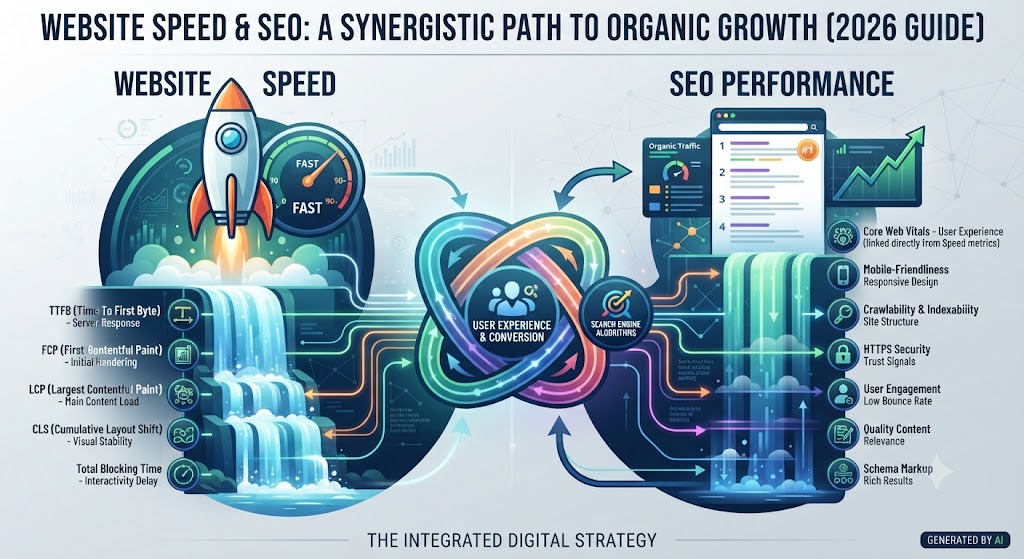
How Website Speed Affects SEO
Google uses page experience signals when ranking websites. Faster websites are easier for users to navigate, encouraging longer visits and more interactions.
Website speed contributes to SEO by:
-
Improving search rankings
-
Increasing crawl efficiency
-
Supporting Core Web Vitals
-
Enhancing mobile performance
-
Reducing page abandonment
-
Improving user engagement
Although high-quality content remains essential, even excellent content can struggle to rank if a website performs poorly.
Understanding Core Web Vitals
Core Web Vitals are Google's key performance metrics that evaluate user experience.
Largest Contentful Paint (LCP)
LCP measures how quickly the largest visible element on a page loads. A fast LCP creates a positive first impression and keeps visitors engaged.
Interaction to Next Paint (INP)
INP measures how quickly a website responds when users click buttons, submit forms, or interact with page elements. Faster interaction improves usability.
Cumulative Layout Shift (CLS)
CLS measures visual stability. Pages where images, buttons, or text unexpectedly move create frustration and reduce user trust.
Improving these metrics strengthens both SEO and overall website quality.
Common Causes of Slow Websites
Many websites experience performance issues due to avoidable mistakes.
Some of the most common causes include:
-
Large, unoptimized images
-
Slow web hosting
-
Excessive JavaScript and CSS files
-
Too many third-party plugins
-
Unoptimized databases
-
Poor caching configuration
-
Heavy animations
-
Uncompressed files
Identifying these bottlenecks is the first step toward improving performance.
Best Practices to Improve Website Speed
Businesses can significantly improve website performance by following proven optimization techniques.
Optimize Images
Compress images and use modern formats such as WebP without reducing visual quality. Smaller image sizes reduce page loading time.
Enable Browser Caching
Caching stores frequently used files on visitors' devices, allowing returning users to load pages much faster.
Minify CSS and JavaScript
Removing unnecessary spaces, comments, and unused code reduces file sizes and speeds up page rendering.
Use a Content Delivery Network (CDN)
A CDN distributes website files across multiple global servers, allowing users to access content from the nearest location for faster loading.
Choose Reliable Hosting
High-quality hosting improves server response times and ensures stable website performance during traffic spikes.
Reduce Unnecessary Plugins
Installing too many plugins can slow down websites and introduce security risks. Keep only essential, well-maintained plugins.
Tools to Measure Website Speed
Regular testing helps identify performance issues before they affect users.
Popular website speed testing tools include:
-
Google PageSpeed Insights
-
Lighthouse
-
GTmetrix
-
Google Search Console
-
Chrome DevTools
These tools provide actionable recommendations to improve loading speed and Core Web Vitals.
Why Choose Coding Rig?
At Coding Rig, we develop websites that are fast, secure, and optimized for both users and search engines. Our team follows modern development practices to improve website speed, Core Web Vitals, mobile responsiveness, and technical SEO.
Whether you need a business website, eCommerce platform, CRM, ERP solution, SaaS application, or custom software, we build high-performance digital solutions that enhance user experience, improve search rankings, and support long-term business growth.
Conclusion
Website speed plays a critical role in SEO, user experience, and business success. A fast-loading website not only ranks better in search engines but also keeps visitors engaged and encourages them to take action.
By optimizing Core Web Vitals, improving server performance, compressing assets, and following modern SEO practices, businesses can create websites that perform exceptionally well in 2026 and beyond. Investing in website speed today helps build stronger customer relationships and delivers long-term digital growth.